There is a straightforward physical reason surfers concentrate on the Bukit peninsula, and it is the same reason building there is harder than anywhere else on the island.
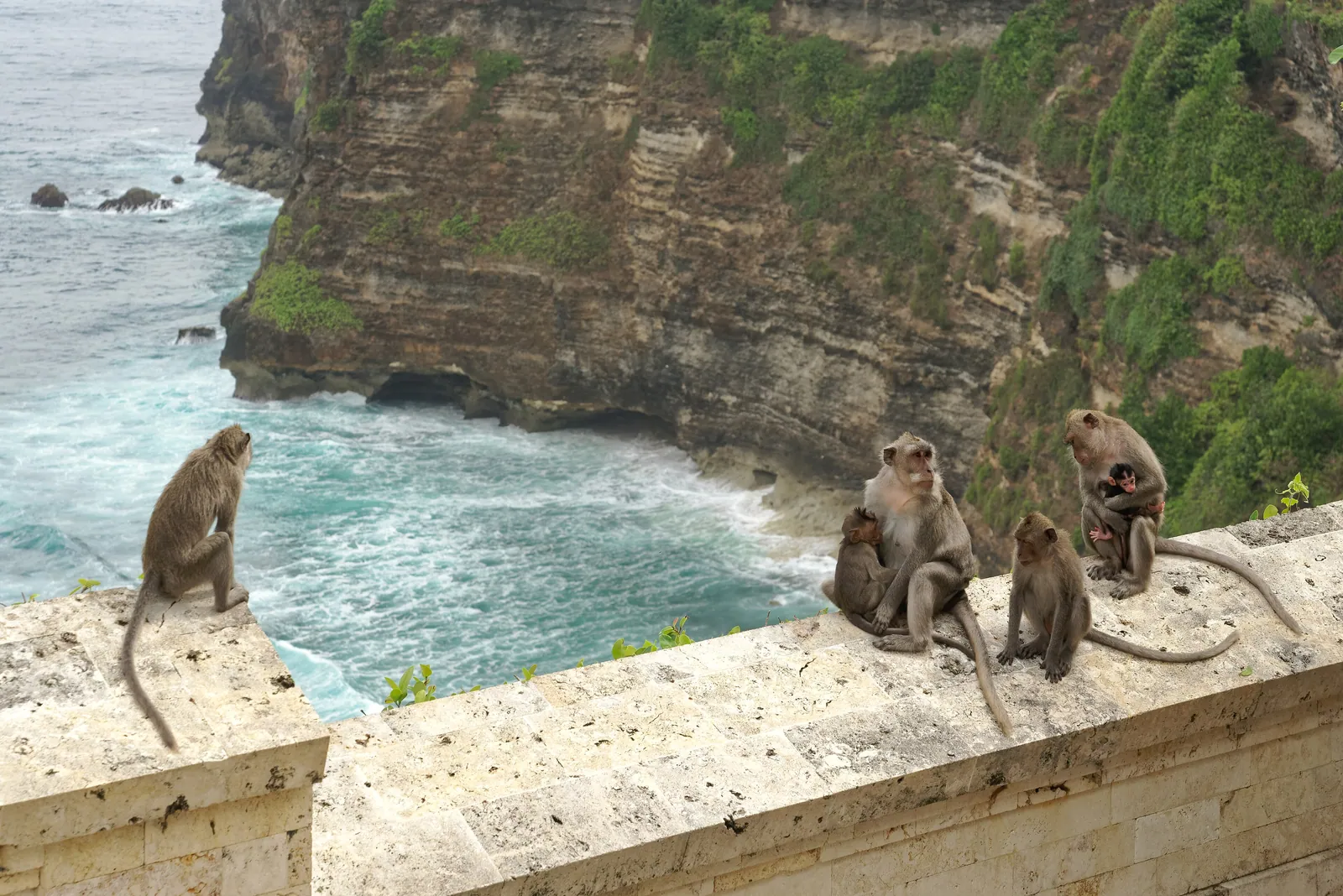
The peninsula is uplifted limestone: old coral reef, raised above sea level, dry and porous and hard. Where that mass meets the Indian Ocean it forms cliffs, the Uluwatu temple sits on one about 70 metres high, and beneath them, reef bathymetry that turns open-ocean swell into long, mechanical, repeatable waves.
Uluwatu, Padang Padang, Bingin, Impossibles and Balangan sit within a few kilometres of each other along that edge. During the dry season, when the prevailing winds blow offshore across this coast, the same swell that produces mush elsewhere produces the waves this coastline is known for. Fetch, bathymetry and wind direction produce that, and they do not change.
What that does to demand
A surfer choosing where to live is solving a narrow optimisation: minimise the time between waking up and being in the water. Ten minutes versus forty minutes is not a preference, it is the difference between surfing daily and surfing sometimes.
This produces unusually concentrated and unusually price-insensitive demand along a short stretch of coast. It also produces a buyer profile that differs from the general market. The Bukit surf buyer is often younger, frequently remote-working, more likely to intend actual residence rather than pure rental yield, and considerably more knowledgeable about local conditions than the average overseas purchaser, they have usually been visiting for years before buying.
That knowledge tends to stop at the waterline, though. People who can read a swell chart with real skill will often buy a plot without asking where its water comes from.
The geology cuts the other way
The same limestone that makes the waves makes the building problems.
Water. Porous karst does not hold a convenient shallow water table. Water on the Bukit is harder to reach, more expensive to secure and less reliable than in the island's interior. Across Bali, groundwater has fallen by more than fifty metres in parts of the island in under a decade, with community wells drying or turning saline, and coastal zones facing saltwater intrusion as extraction intensifies. Tourism is estimated to consume around 65 percent of the island's water.
On a dry limestone peninsula with a building boom, that arrives fast. Ask any Bukit plot the same three questions: what is the source, what is the current depth, and what happened last October.
Cliff stability. Cliff-edge construction on limestone raises questions about erosion, loading and drainage that a standard residential build does not. Development along this coastline has been publicly contested, with residents, surfers and coastal specialists raising concerns about erosion and marine impact. The dramatic plot is dramatic for a reason, and the reason is a face that the sea is actively working on.
The reef below. The peninsula's fringing reefs shelter over 400 species of reef-building coral. Construction spoil, sediment runoff and wastewater discharged downslope arrive there. So does the surf break, which is the same reef. There is a closed loop here that is rarely stated out loud: degrade the reef and you degrade the wave you moved for.
The neighbours
The cliff forest holds roughly 650 long-tailed macaques, which is the population most visitors meet at the temple. They are habituated, they are opportunistic, and they will comprehensively test a house that was designed as if they did not exist. Secure bins, lockable openings and no accessible food storage are not optional details here.
Green turtles and hawksbills nest on beaches along this coastline, including Padang-Padang and Suluban. Artificial light behind a nesting beach disorients hatchlings, which navigate towards the brightest horizon and, given a lit villa, go the wrong way. Shielded, downward-facing, low-colour-temperature lighting solves this almost entirely and costs approximately nothing at the specification stage. Retrofitting it after a complaint costs considerably more.
Inland, Bali's own starling, critically endangered, down to six wild birds in 2001 and recovered to roughly 420 in Bali Barat National Park plus about a hundred on Nusa Penida by a 2021 survey, is the standing reminder that this island's wildlife recovers when local communities decide it should, and does not when they do not.
What a competent Bukit build looks like
Build on the Bukit. Build on it accurately.
Set back from the cliff edge further than the minimum. Design drainage so that runoff and spoil do not go over the side. Capture rainwater and reuse greywater, because on a limestone peninsula the marginal cost of water only goes one direction. Put in soak wells rather than sealing the plot, which recharges the aquifer you are drawing from. Size the pool to what the water supply can actually sustain in a dry October rather than to what looks good in July. Specify shielded lighting if you are anywhere behind a nesting beach. Build for macaques, because they are already there.
None of this is exotic. It is what the environment charges for the wave, and the invoice arrives either at the specification stage or later, with interest.
The part worth saying plainly
The Bukit is being built out quickly, and the qualities that attracted people to it are finite in a way the land is not. Water, cliff integrity and reef health are shared resources, and a house that treats them as someone else's problem degrades the exact asset it was bought for.
We decline enquiries for cliff-edge plots where the drainage plan ends at the property line, and for builds sized to a water supply that is already failing in the dry season. Not as a gesture. Those are the projects that end up sealed, contested, or worth less than they cost.